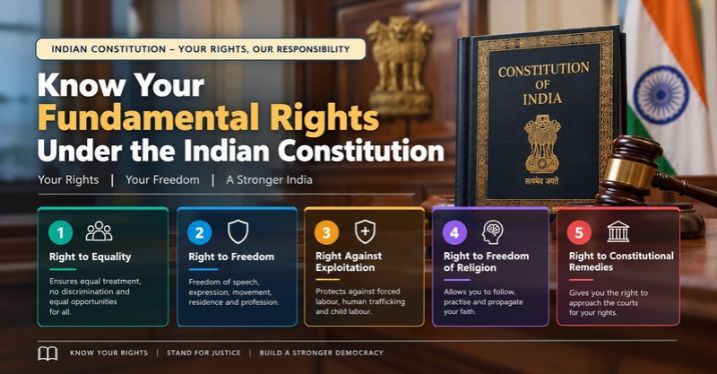
Know Your Fundamental Rights Under the Indian Constitution
Know Your Fundamental Rights Under the Indian Constitution Fundamental rights in India are the basic rights that Part III (Articles 12 to 35) of the Constitution gives to every person. There are six groups of these rights. If the State takes away your right, you can ask the court to protect it. Many people learn...
Read More
Legal Awareness in India: Why It Matters and Where to Start
Legal Awareness in India: Why It Matters and Where to Start Legal awareness means knowing the basic laws, rights, and duties that apply to you as a citizen of India. It matters because it helps you recognise when your rights are being violated, protects you from being taken advantage of, and shows you where to...
Read More
Free Legal Aid at the Supreme Court of India: Eligibility & How to Apply
Free Legal Aid at the Supreme Court of India: Eligibility & How to Apply Free legal aid at the Supreme Court of India is arranged through the Supreme Court Legal Services Committee (SCLSC), a statutory body set up under the Legal Services Authorities Act, 1987. If your case and your circumstances fall within Section 12...
Read More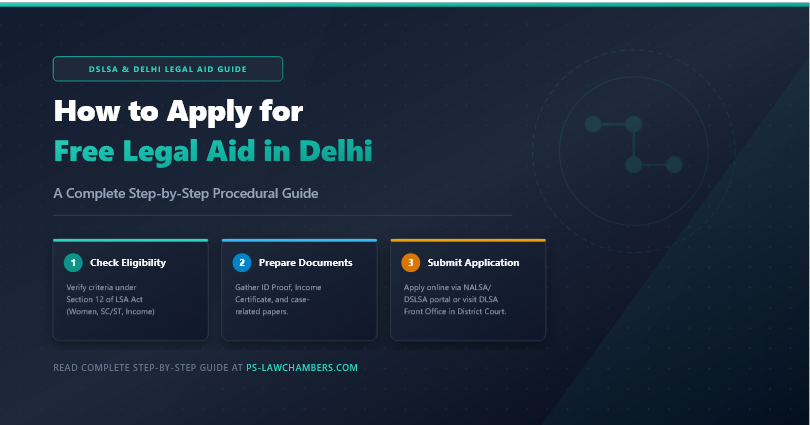
How to Apply for Free Legal Aid in Delhi (Step-by-Step Guide)
How to Apply for Free Legal Aid in Delhi (Step-by-Step Guide) If you’re facing a legal issue in Delhi and can’t afford a lawyer, you don’t have to handle it alone — and you don’t need to fully understand the law to get help. The Delhi State Legal Services Authority (DSLSA) exists to provide exactly...
Read More
The Right to Free Legal Aid in India: Meaning, Development & Legal Framework
The Right to Free Legal Aid in India: Meaning, Development & Legal Framework Access to a court means little if a person cannot afford the lawyer needed to be heard in it. The right to free legal aid exists precisely to close that gap, and in India, it has grown from a policy idea into...
Read More
What Is Free Legal Aid in India? A Complete Guide
What Is Free Legal Aid in India? A Complete Guide Not everyone who needs a lawyer can afford one. India’s Constitution and its legal aid framework were built around that simple fact – the idea that access to justice should not depend on a person’s income. This guide explains what free legal aid actually is,...
Read More
Fundamental Rights & Public Interest Litigation (PIL)
Fundamental Rights & Public Interest Litigation (PIL) What Are Fundamental Rights? Fundamental Rights are the basic human rights guaranteed to every citizen of India by the Constitution. They protect individual dignity, equality, and freedom and cannot be taken away by the government without lawful authority. If these rights are violated, a citizen can approach the...
Read More
Criminal Law
Criminal Law What Is Criminal Law? Criminal law deals with acts that are considered offences against society or the state, not just against an individual. When someone breaks a criminal law, the state prosecutes them. If found guilty, the punishment can include imprisonment, fines, or both. In India, criminal matters are primarily governed by the...
Read More
Service Law & Labour Law
Service Law & Labour Law What Is Service Law? Service Law covers the rules and regulations that govern employment in government and public sector organisations. It deals with matters such as recruitment, appointments, promotions, pay, disciplinary proceedings, transfers, regularisation of service, and termination of employment. Government employees who feel they have been unfairly treated can...
Read More