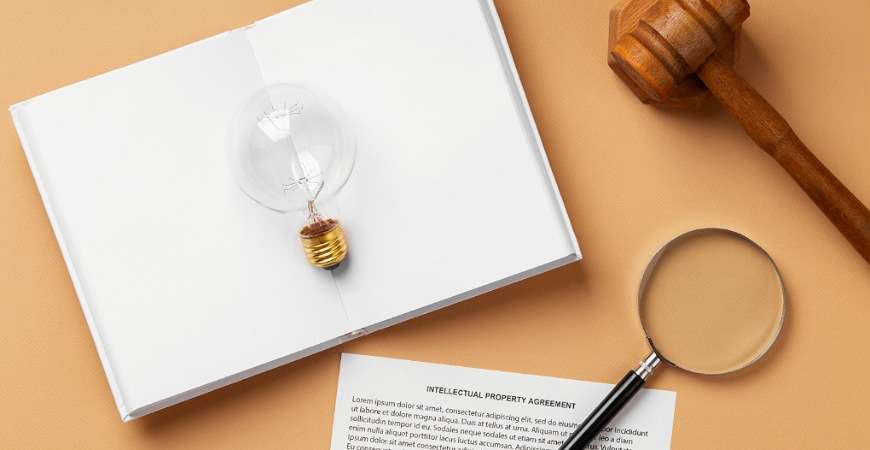
Intellectual Property (IP) refers to creations of the human mind — inventions, literary and artistic works, designs, logos, brand names, music, software, and more. The law gives creators and businesses exclusive rights over these creations for a defined period, allowing them to benefit from their own work and preventing others from using it without permission.
Why Does Intellectual Property Protection Matter?
In today’s knowledge-based economy, ideas, brands, and creative works often form the most valuable assets of individuals and businesses. Without IP protection, anyone could freely copy your invention, use your brand name, or reproduce your creative work. IP rights give creators and innovators the legal tools to protect their work and earn from it.
The Main Types of Intellectual Property
Trademark
A trademark is any word, name, symbol, logo, or combination that identifies and distinguishes the goods or services of one person or business from those of others. Registering a trademark gives the owner exclusive rights to use it and the ability to take legal action against anyone who copies or imitates it.
Duration: 10 years, renewable indefinitely.
Copyright
Copyright protects original literary, artistic, musical, and dramatic works — including books, paintings, films, songs, photographs, and software code. Copyright protection comes into existence automatically when a work is created; registration is not mandatory, but it provides stronger legal evidence of ownership in case of a dispute.
Duration: The creator’s lifetime plus 60 years.
Patent
A patent protects a new invention — a product or process that is novel, involves an inventive step, and can be applied industrially. A patent gives the inventor the exclusive right to manufacture, use, and sell the invention for a limited period. After the patent expires, the invention enters the public domain.
Duration: 20 years from the date of filing.
Industrial Design
A registered design protects the visual appearance (shape, configuration, pattern, or ornamentation) of a product, as distinguished from its function. Design protection prevents others from manufacturing or selling products with a similar appearance.
Duration: 10 years, extendable by 5 years.
Key Laws Governing Intellectual Property in India
Trade Marks Act, 1999
Copyright Act, 1957
Patents Act, 1970
Designs Act, 2000
Geographical Indications of Goods (Registration and Protection) Act, 1999
Information Technology Act, 2000 — relevant for online copyright and data protection
What Is IP Infringement?
Infringement occurs when someone uses your IP without your authorisation. For example — selling goods under your registered trademark, reproducing your copyrighted book without permission, or manufacturing a patented product without a licence. Infringement can attract both civil remedies (such as injunctions and damages) and criminal penalties.
Frequently Asked Questions
Q1. How long does it take to register a trademark in India?
Typically 6 to 18 months, depending on whether objections are raised by the Trademark Registry or third parties. A ™ symbol can be used immediately after filing; the ® symbol is used only after registration is granted.
Q2. Does copyright need to be registered?
No. Copyright protection arises automatically when an original work is created. However, registering your copyright with the Copyright Office creates an official public record and strengthens your position in any legal dispute.
Q3. Can software or a mobile application be protected under IP law?
Yes. The source code of software can be protected as a literary work under copyright law. The brand name and logo of an application can be protected as a trademark. However, software as such (without a technical effect) is not patentable in India.
Q4. What should I do if someone is using my trademark without permission?
You can send a legal notice demanding they stop using the mark. If they refuse, you can file a civil suit for infringement and seek an injunction, damages, and an account of profits. In serious cases, a criminal complaint can also be filed.
Q5. Do startups need to worry about IP protection?
Yes, from the very beginning. Protecting your brand name through trademark registration and your creative output through copyright prevents competitors from copying your work and is often important for investors and business partnerships.