
Free Legal Aid at the Supreme Court of India: Eligibility & How to Apply
Free Legal Aid at the Supreme Court of India: Eligibility & How to Apply Free legal aid at the Supreme Court of India is arranged through the Supreme Court Legal Services Committee (SCLSC), a statutory body set up under the Legal Services Authorities Act, 1987. If your case and your circumstances fall within Section 12...
Read More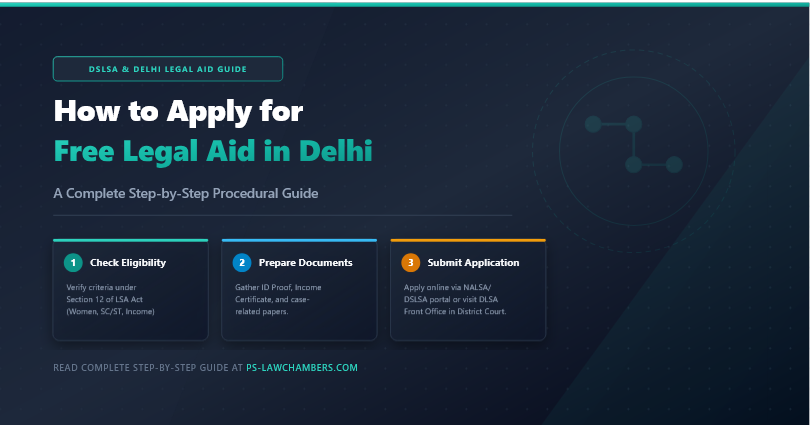
How to Apply for Free Legal Aid in Delhi (Step-by-Step Guide)
How to Apply for Free Legal Aid in Delhi (Step-by-Step Guide) If you’re facing a legal issue in Delhi and can’t afford a lawyer, you don’t have to handle it alone — and you don’t need to fully understand the law to get help. The Delhi State Legal Services Authority (DSLSA) exists to provide exactly...
Read More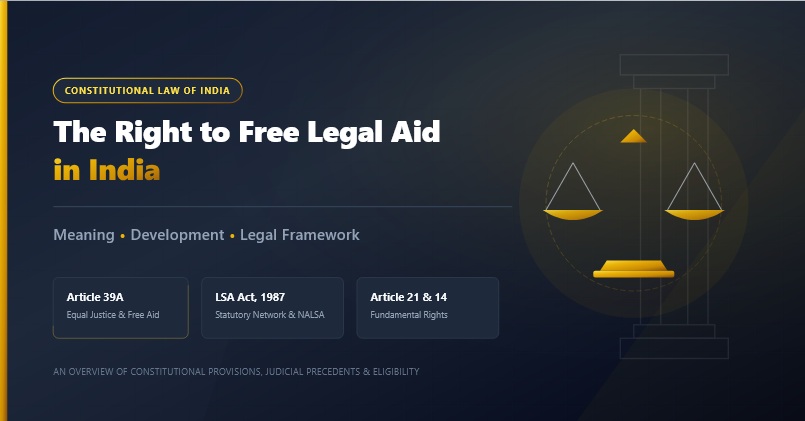
The Right to Free Legal Aid in India: Meaning, Development & Legal Framework
The Right to Free Legal Aid in India: Meaning, Development & Legal Framework Access to a court means little if a person cannot afford the lawyer needed to be heard in it. The right to free legal aid exists precisely to close that gap, and in India, it has grown from a policy idea into...
Read More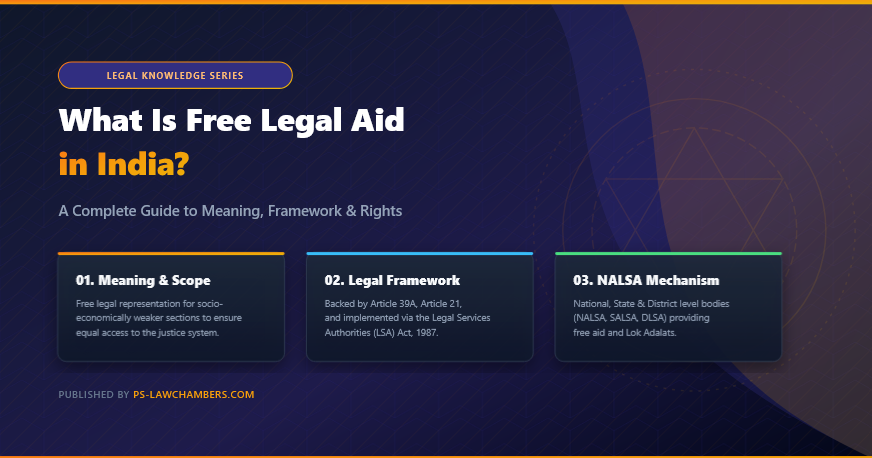
What Is Free Legal Aid in India? A Complete Guide
What Is Free Legal Aid in India? A Complete Guide Not everyone who needs a lawyer can afford one. India’s Constitution and its legal aid framework were built around that simple fact – the idea that access to justice should not depend on a person’s income. This guide explains what free legal aid actually is,...
Read More
Irretrievable Breakdown of Marriage
Marriage and divorce in India are governed by the personal laws of different communities such as Hindu Marriage Act, 1955 (“HMA”), The Dissolution of Muslim Marriage Act, 1939, Special Marriage Act, 1954, the Divorce Act, 1869, the Parsi Marriage and Divorce Act, 1936 etc. There are times, when the marriage between the parties stands such...
Read More
A Norm of Initiating Package of Cases
Rajan v. The State of Madhya Pradesh [1] Hon’ble Justice Vivek Rusia observed as under: “Nowadays the very purpose of the insertion of Section 498-A in the Penal Code, 1860 with the object to punish the husband or his relatives, has been defined. In most of the cases, this section is being misused as observed by...
Read More
Maintenance to Wife
There are numerous laws applying to matters pertaining to maintenance and such jurisdiction is assumed by the Family Courts under the Family Courts Act, 1984. The laws governing maintenance are as under: Code of Criminal Procedure, 1973. Family Courts Act, 1984. Hindu Adoptions And Maintenance Act, 1956. Protection of Women From Domestic Violence Act, 2005...
Read More
Settlement in Divorce by Mutual Consent
Section 13 B of the Hindu Marriage Act, 1955, provides for divorce by mutual consent, wherein both the parties present a joint petition before the Court, expressing their intention to end their marital ties. Usually, a settlement agreement or mediation report is being made, consisting of terms on which the parties agree, which usually consists...
Read More
Plight of Matrimonial Disputes in India
Matrimonial disputes are the most contested and debated matters which dwells between the question of what is right and what is the law. It is not uncommon that husband or wife initiates false / counterblast proceedings, package of cases such as under Hindu Marriage Act, 1955, Code of Criminal Procedure, 1973, Protection of Women From...
Read More